
System Construction
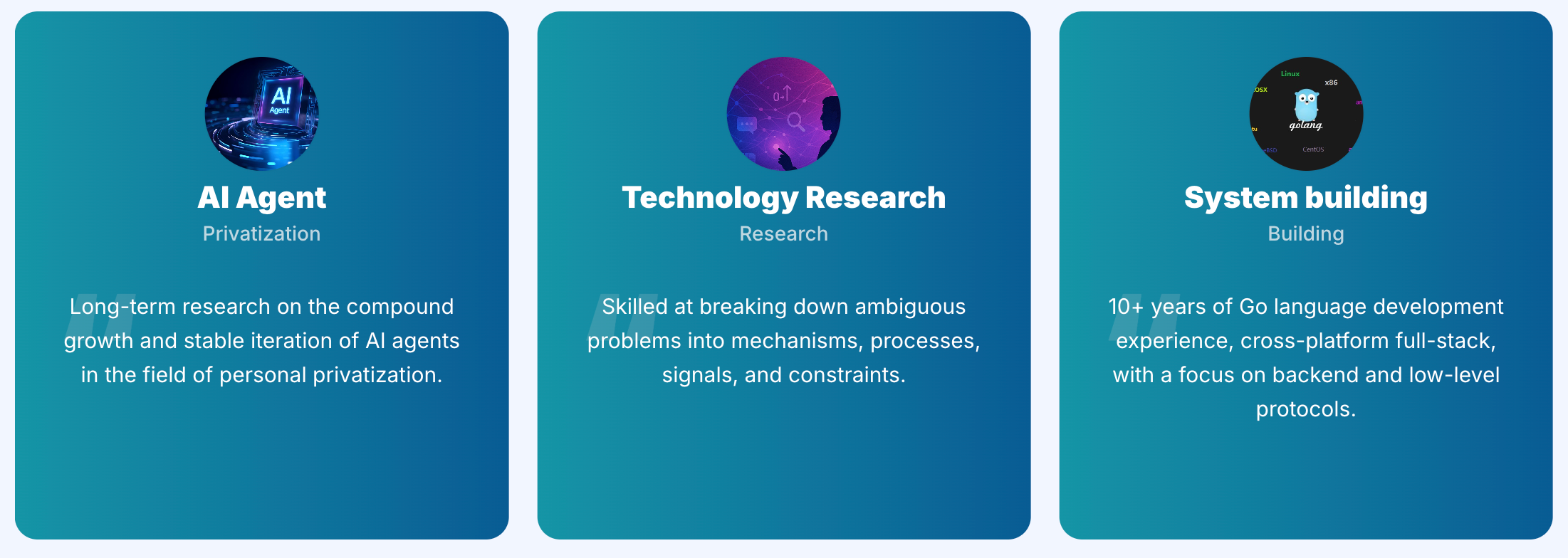
- Full-stack: Web3/Blockchain/Go/C/C++/Python/Vue/JS/CAD/Network Protocols/Automated Trading/Cross-platform
- AI automation, agent systems, and research-driven "0-to-1" development
- 10+ years of Go development; cross-platform full-stack expertise with a focus on backend systems and low-level protocols
- Building complex, high-concurrency, and highly available systems; deploying and maintaining distributed clusters
- Skilled at decomposing complex problems into actionable workflows, monitoring systems, and decision-support engineering
- Web3/Blockchain: End-to-end technical architecture (frontend, backend, and smart contracts); consensus algorithms, cryptography, and security; covering L1/L2 networks such as EVM, Bitcoin, and Solana
Routing Blockchain System
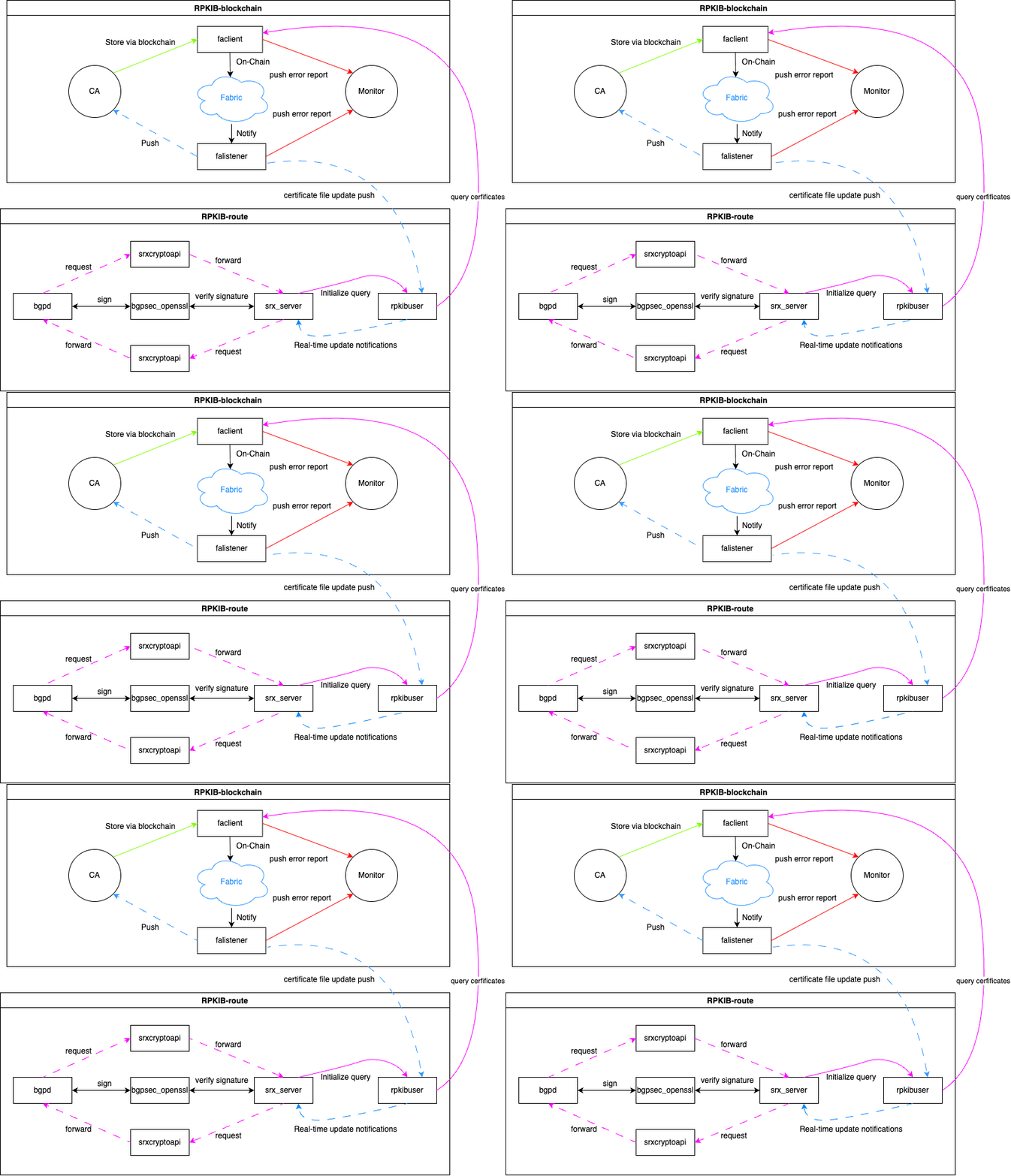
- RPKIB: A decentralized implementation of Public Key Infrastructure (PKI) utilizes the Fabric consortium blockchain for certificate storage and synchronization, while interfacing with the Quagga routing simulation system to perform route origin authentication and route path security authentication
Security Hardening for the BGP Routing Protocol
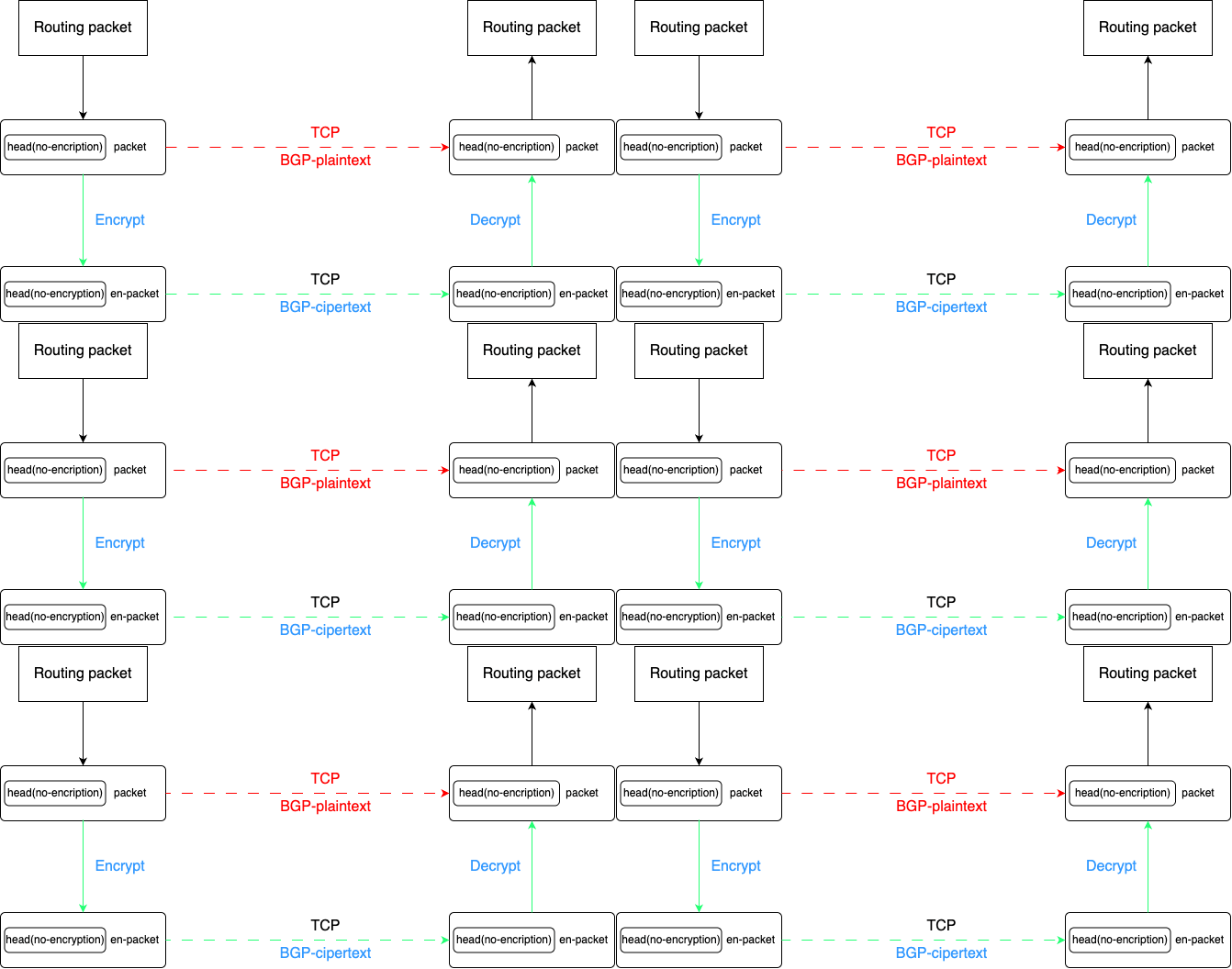
- BGP Protocol Encryption and Decryption: In the implementation logic of the BGP protocol,
bgpdwrites routing messages directly to the socket buffer; however, reading these messages requires first reading a fixed 19-byte header to obtain information such as message size and type. The message body is transmitted in encrypted form by excluding this 19-byte header from the encryption process. During the read operation, the logic of pre-reading the 19-byte header remains unchanged; only the remaining message data is extracted and decrypted. Once successfully decrypted, the data replaces the original encrypted message in the memory buffer, ready for subsequent detailed parsing
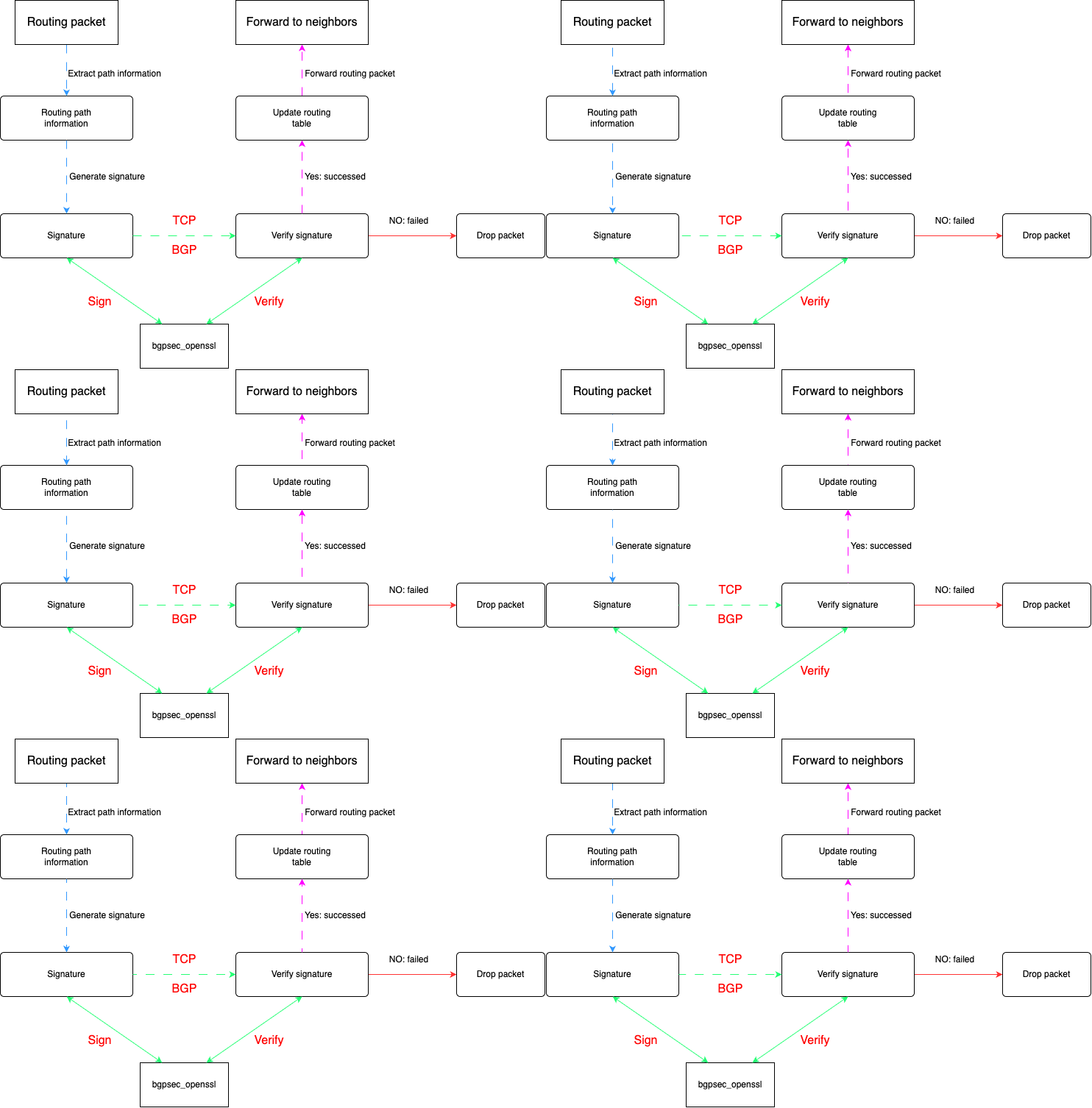
- BGP Protocol Signing and Signature Verification: Routing information signing involves signing routing data using the routing node's own private key; this function is performed by the
bgpsec_openssldynamic library using an elliptic curve algorithm. The process retrieves the private key based on the provided certificate SKI to sign the data and generate a hash digest, which is then transmitted to a neighbor node via TCP in accordance with the BGP protocol. Upon successful parsing of the routing information, thebgpsec_openssldynamic library performs signature verification using the parsed signature data and the sender's SKI